SAME DAY APPOINTMENTS NOW AVAILABLE - Contact Us Today!
South County: (314) 894-5600
Festus: (636) 931-4020

ADVANCED
ENDODONTICS
Root Canal Specialists
Dr. Blake Clarke
Dr. David Hatch
Dr. Emilia Hall
Dr. Charles Clarke
You've Got Questions?
We've Got Answers.
Wondering why you of all people might need a root canal? It's normal to feel anxious about dental procedures, but this treatment is necessary to save a tooth that may otherwise need to be extracted. It also helps alleviate or prevent future pain, infection, and swelling. Root Canals help us save teeth. Our goal is to ensure your root canal experience is safe and comfortable, allowing you to enjoy life free from tooth pain and worries.
What Teeth May Need Root Canal Treatment?
-
Painless teeth that have a dark area (shadow) on the x-ray. This may be a sign that the nerve/tooth is dead due an infection in the tooth, even if the tooth isn't causing any pain.
-
Cold or hot sensitive teeth
-
Pain or tenderness when biting
-
Spontaneous or persistent tooth pain
-
Painful teeth or jaw area
-
A cracked, fractured, or injured tooth
-
Teeth causing swelling, drainage, or dental abscesses

What is a Root Canal?

-
The actual root is NOT removed.
-
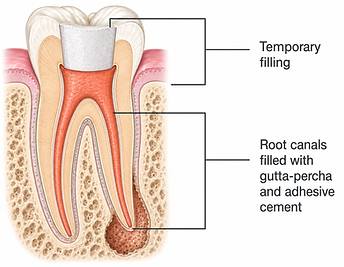
After the tooth is completely numb, a small opening is made in the biting surface of the tooth or crown.
-
The inside of the roots (the canals) are cleaned and disinfected (similar to "roto-rooting" a kitchen sink or drain, but microscopically).
-
The canals of the roots are flushed with disinfectant, dried and then sealed with a medical grade filling material and bioceramic cement.
-
A temporary or permanent filling is placed in the opening, depending on the treatment plan.
-
If a temporary filling is placed, your dentist will place a permanent restoration (either filling or crown) within 2-4 weeks.
Post-Op Instructions: What should I do after my Root Canal?
-
Most patients return to work or normal activities the same day (unless the weather is nice or they have other fun stuff they'd rather do).
-
For the first hour, do not chew, drink hot or cold liquids, or smoke. Avoid eating until the numbness has completely worn off so you do not accidentally bite or burn your cheek, lip, or tongue.
-
Avoid chewing hard foods or biting heavily on the treated tooth until the permanent filling or crown has been placed. If your doctor identified a crack, you may be instructed not to chew on that tooth at all.
-
Call your dental office as soon as possible to schedule an appointment for the permanent restoration.
-
Mild soreness or tenderness when biting is common for several (3-7) days and should gradually improve.
-
Antibiotics are not routinely needed following endodontic treatment. If one is prescribed for your specific condition, please take exactly as directed.
-
Take and over-the-counter pain medications as directed by your doctor following endodontic treatment. Depending on your medical history, options include ibuprofen (Advil), Aleve, or acetaminophen (Tylenol).
-
Call our office if you experience increasing swelling, severe or worsening pain, a reaction to medication, loss of the temporary filling, or any symptoms that concern you.